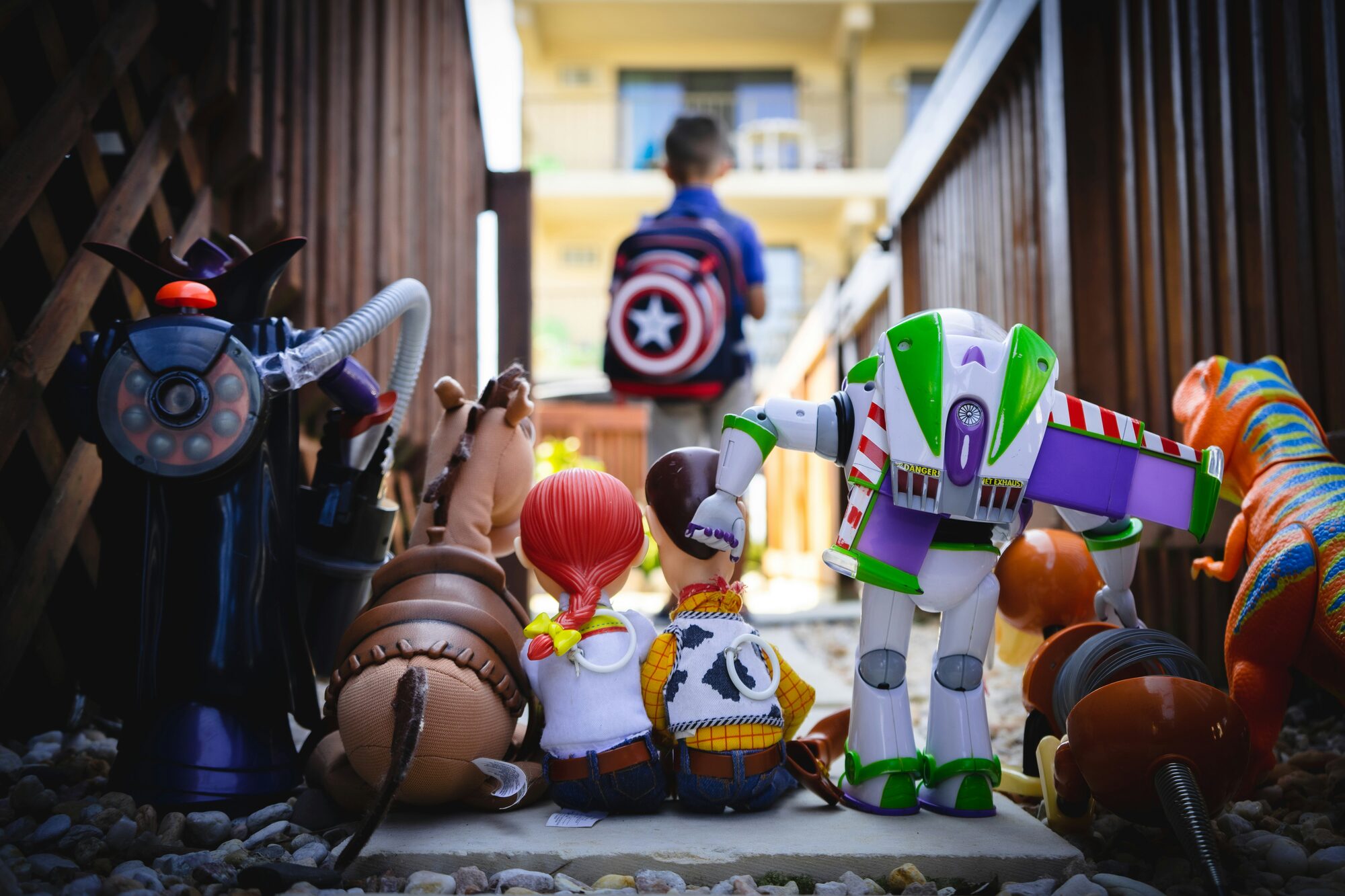
Image by Chris Hardy, Unsplash
All the way back in November 1995, history was made when Pixar featured their first ever full-length feature film, a movie that was the first ever entirely computer-generated animated film. Toy Story is one of a kind because of how it was produced and made. This series captured the hearts of millions of viewers, who couldn't help but fall in love with Woody, the resident cowboy, and Buzz Lightyear, the delusional space ranger.
The first film introduced Woody and Buzz's rivalry-turned-friendship, a story about jealousy giving way to loyalty. Toy Story 2 deepened that world by introducing Jessie and Stinky Pete, with the fear of being replaced and outgrown at the centre of the narrative. Eleven years later, this series wrapped up Andy's childhood, the boy from whose world we got introduced to the toys, and their journey from his younger days into adulthood. But the world of the toys continued, as they confronted uncertainty and eventually found a new home with Bonnie.
In 2019, Toy Story 4 was released, and the narrative focused on Woody's own journey along with Bo Peep, and gave viewers an ending many took as the beloved character's true farewell.
Each film within this franchise managed something rare: with every new movie, audiences kept returning to the world of these toys, film after film, decade after decade. Every number in a streaming report is really just a record of people choosing to come back to something, again and again, sometimes years after they first saw it. And few franchises make that point as clearly as Toy Story.
Through this article, we'll show you how audiences in the run-up to the release of Toy Story 5 showed up and didn't just remember the first four films, but watched them.
Toy Story Takes Four of the Top Six Movies by Reach on Disney+ in June 2026
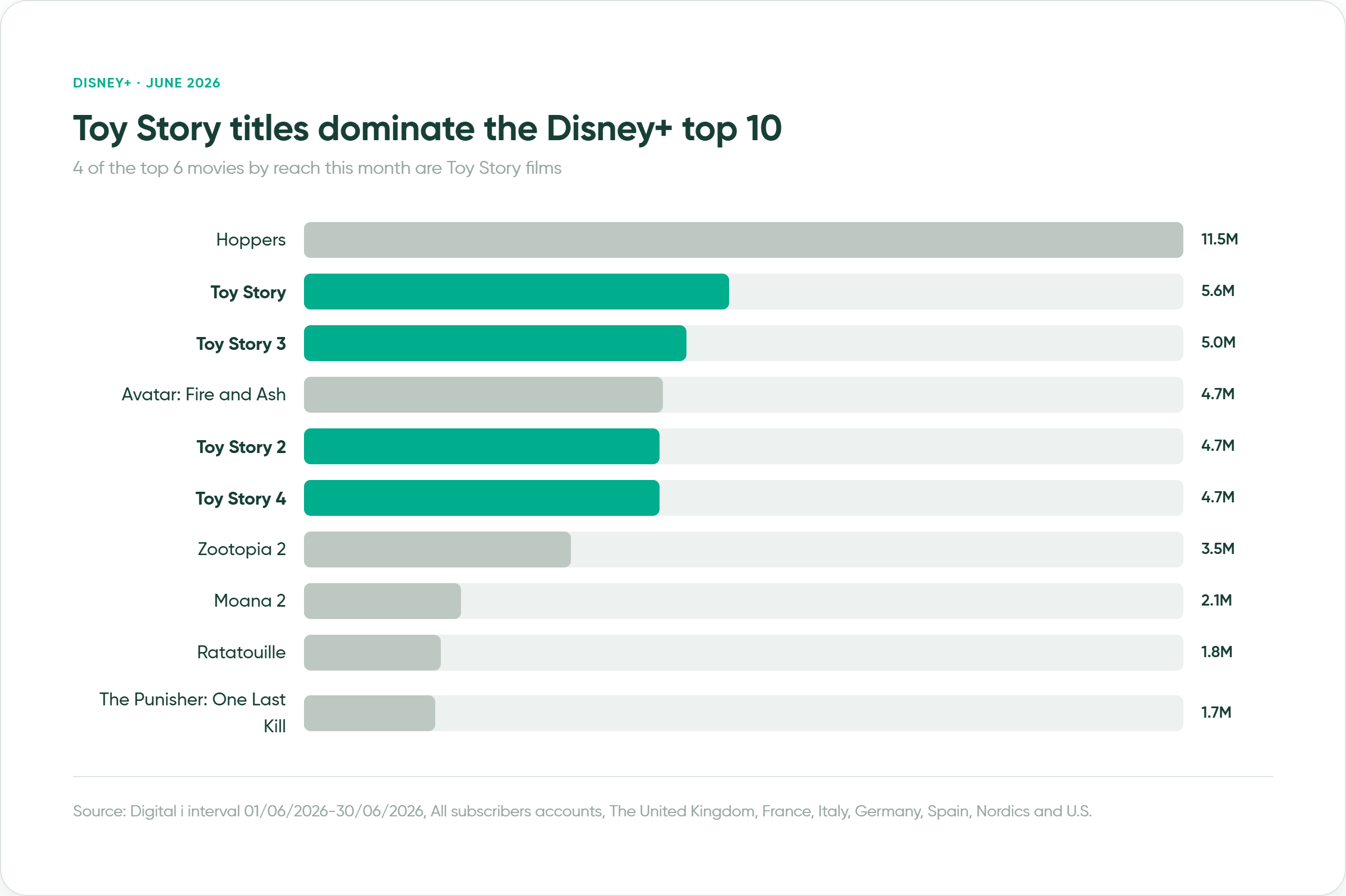
Looking at Disney+'s most-watched movies across France, the UK, Italy, Germany, Spain, the Nordics, and the US for June 2026, four of the top six titles by reach were Toy Story films. Toy Story itself came in at 5.6 million reach, followed by Toy Story 3 at 5.0 million, and Toy Story 2 and Toy Story 4 tied at 4.7 million each, sitting alongside newer releases like Zootopia 2 and Moana 2 in the same top six.
What the data from June shows us is that a franchise that's three decades old continues to pull in audiences at a similar scale to some brand new titles released in 2026. While there might be a few things impacting this return, storylines, the characters people grew up with, or simply nostalgia, could all very much be part of why audiences keep returning to the world Toy Story wove almost three decades ago.
Streaming of Every Toy Story Film Surged in the Months Before Toy Story 5's Release
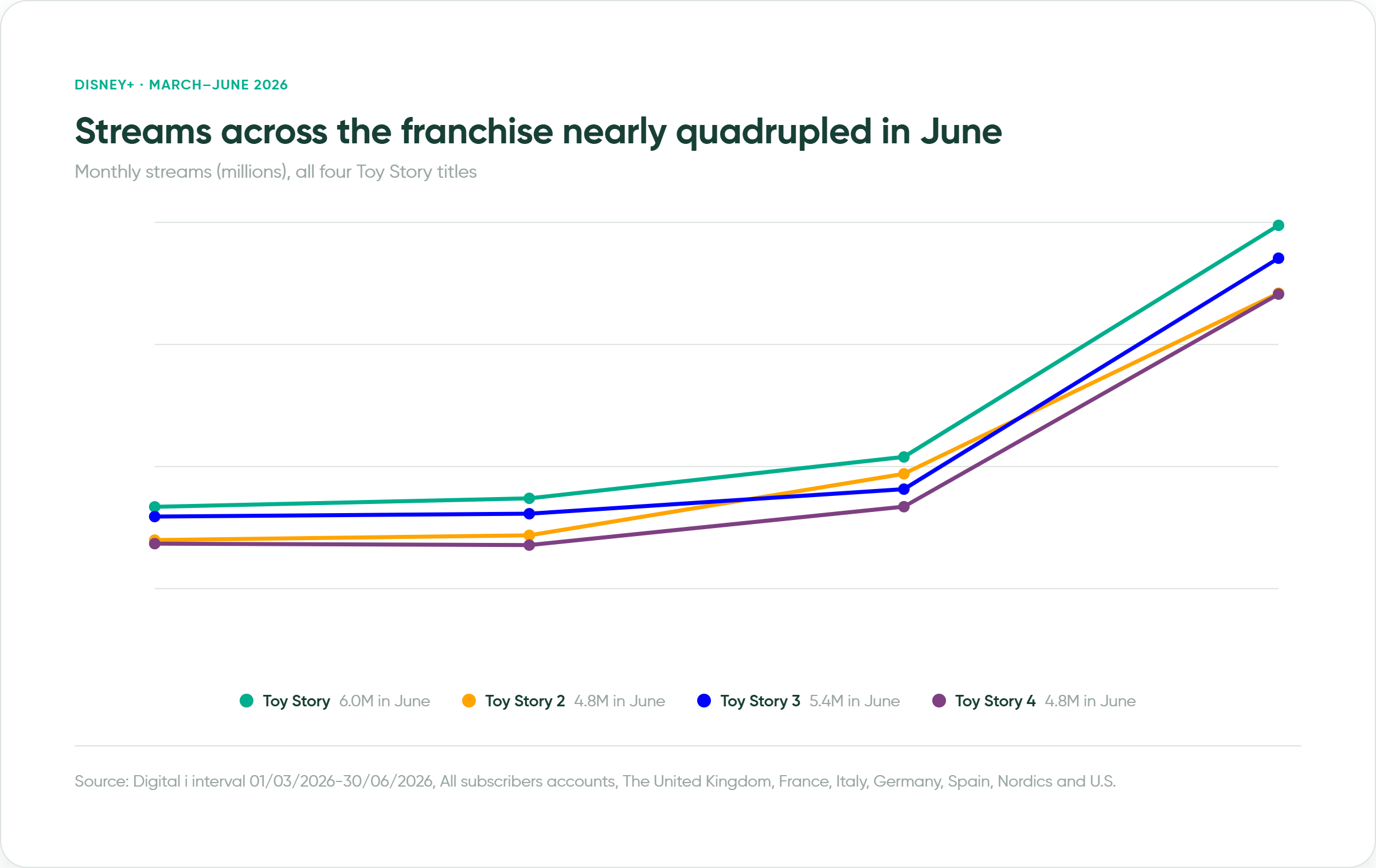
The monthly data across the UK, France, Italy, Germany, Spain, the Nordics, and the US shows the build clearly. Between March and June 2026, streams of the original Toy Story climbed from 1.34 million to 5.95 million, a more than fourfold increase. Toy Story 2 grew even faster in relative terms, rising from 0.79 million to 4.84 million, over six times its March total.
Toy Story 3 followed a similar path to the original, up from 1.18 million to 5.41 million, while Toy Story 4, the most recent instalment, saw the sharpest relative jump of all four, growing from 0.74 million to 4.83 million, more than a sixfold increase. Every single film in the franchise was climbing at once, and the steepest part of that climb landed in June, the same month Toy Story 5 began rolling out in cinemas internationally.
This shows that Toy Story happens to be one of those franchises that people still feel something for, as even decades later, audiences find themselves getting pulled in towards Woody and Buzz like they did in 1995, and all the way down to the narratives woven by Forky, Andy, and Bonnie, along with the toys. The numbers didn't build that attachment, they're just proof it was there all along, waiting for a reason to come home.
Households Without Kids Are Driving a Growing Share of Toy Story's Audience
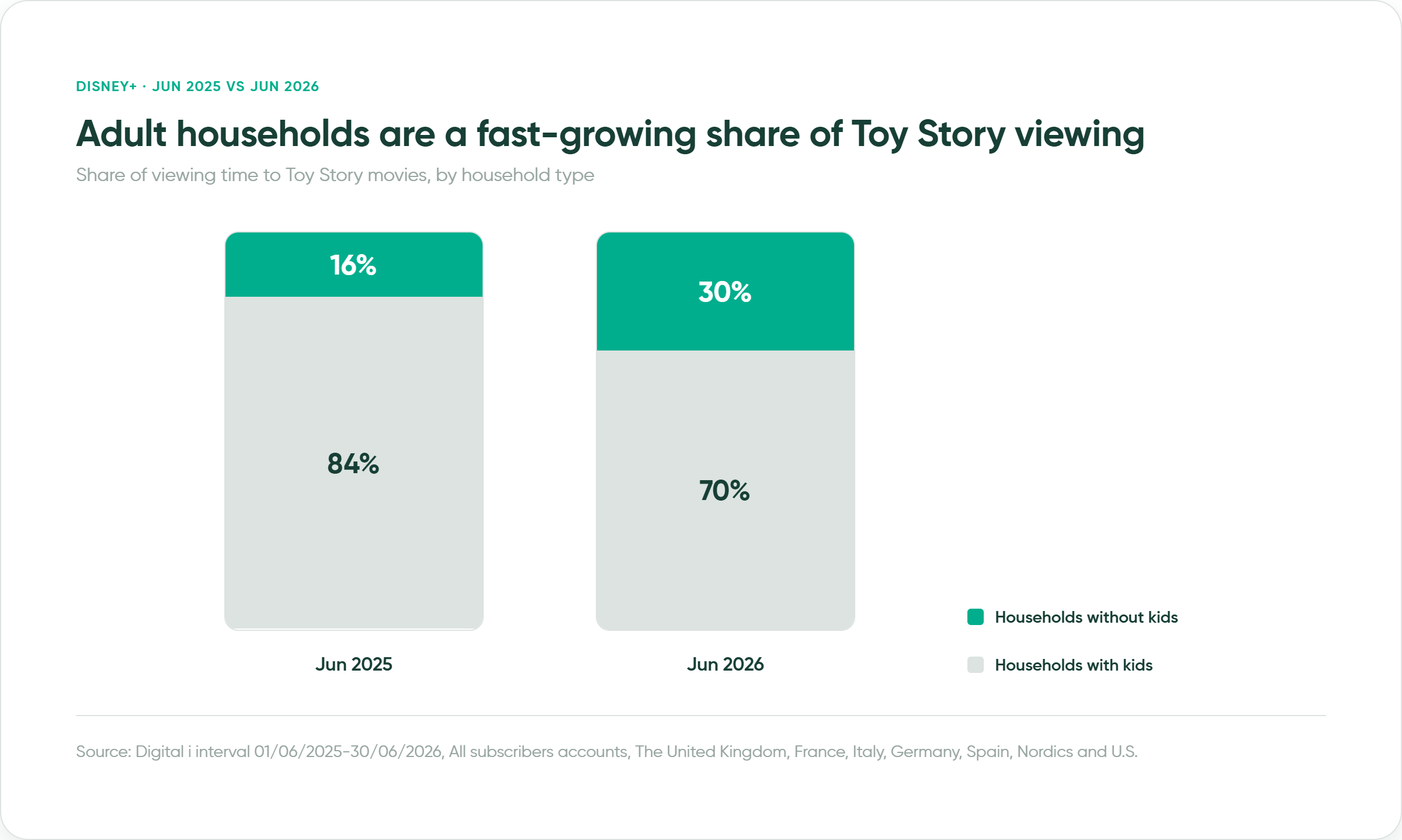
In June 2025, households without kids accounted for only 16% of all viewing time to Toy Story movies on Disney+ across the UK, France, Italy, Germany, Spain, the Nordics, and the US.
In June 2026, this number had risen to 30%, households without kids are now making up almost twice the proportion of viewing that they were in June 2025. It's a meaningful shift. This audience shift could simply come down to families introducing their children to the universe of Toy Story, alongside a number of adults choosing to return to the movies they've grown up with.
More Than Half of Toy Story's Viewers Didn't Stop at One Film
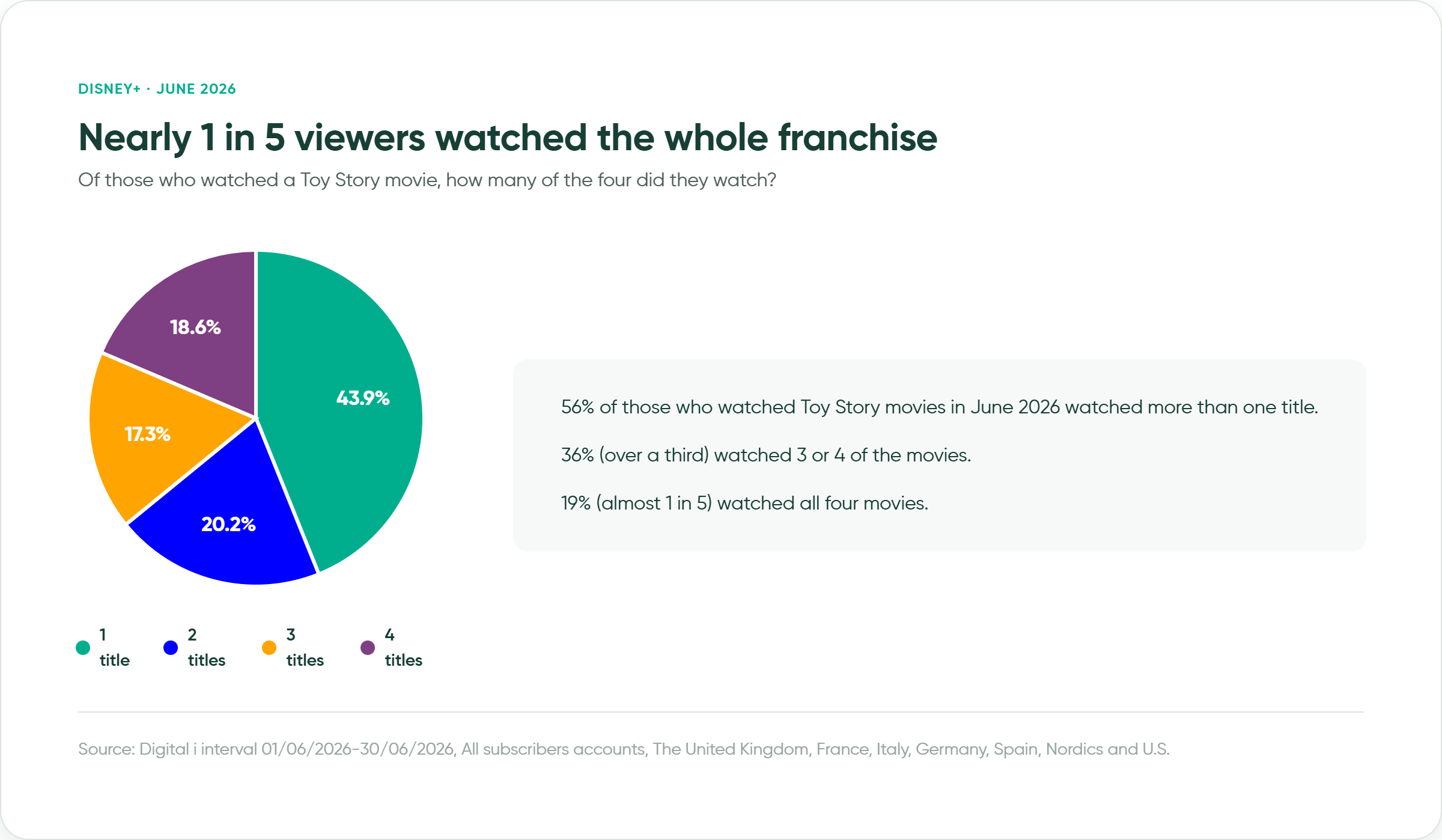
Of everyone who watched a Toy Story movie on Disney+ in June 2026 across the UK, France, Italy, Germany, Spain, the Nordics, and the US, 56% watched more than one title. Over a third, 36%, watched three or four of the films. Almost one in five, 19%, sat through all four.
This wasn't a franchise people dipped into out of curiosity, watched once, and moved on from. It was one they stayed with, film after film, the same way audiences have been staying with it since 1995. Once you're back in the world Toy Story wove, it turns out, it's hard to leave after just one visit.
Franchise Loyalty, Not Just Franchise Memory
Put together, these four numbers tell one story rather than four separate ones. Toy Story wasn't just holding its own against brand new Disney+ releases, it was building momentum months before its own fifth film even arrived. It wasn't only families revisiting an old favourite, adults were coming back to it on their own terms, in growing numbers.
Once people started watching, most of them didn't stop at one film. It can be argued that nostalgia is passive, a fondness for something left in the past. But what we've seen in the case of Toy Story is that audiences didn't just remember the world Toy Story wove three decades ago, they walked back into it, again and again, right up until the moment a fifth chapter of it arrived in cinemas.
How Digital i Helps Franchises Prove Their Staying Power
Toy Story's numbers make for a great story. They also make a bigger point: franchise durability isn't something a studio or platform can measure from the inside. It shows up in whether audiences keep returning, how deep that return goes, and whether a franchise is building or fading in the months before something new arrives.
If you're sitting on a franchise and want to know whether it has this kind of pull, or need the independent data to prove it in a room full of platforms, that's exactly what Digital i does.