

After almost 6 weeks - the longest ever finals - the World Cup ended on Sunday night with worthy winners, record ratings across the globe, a profound sense of ‘so near, yet so far’ for fans of Scotland and England, and some innovations which will shape the world's biggest sporting event for decades to come, on and off screen.
The biggest average audience registered was by the BBC during the England vs Argentina semi-final, with Overnight figures estimating 14.1 million viewers in the UK watched the match, with a peak audience of 24m.
The final itself, the only match shown simultaneously by both host broadcasters, was watched by an average audience of over 12 million viewers live on BBC1 and ITV1*, the vast majority - 9.7 million - on the BBC who finally abandoned the comfort of their studio in Salford to cross the Atlantic to broadcast from the stadium where the action was happening.
While no doubt disappointing to ITV who had a very good tournament overall with their own New York studio and panellists attracting much praise, this 4:1 ratio is unlikely to have been a surprise as it’s similar to previous sporting events which have been shown on both channels.
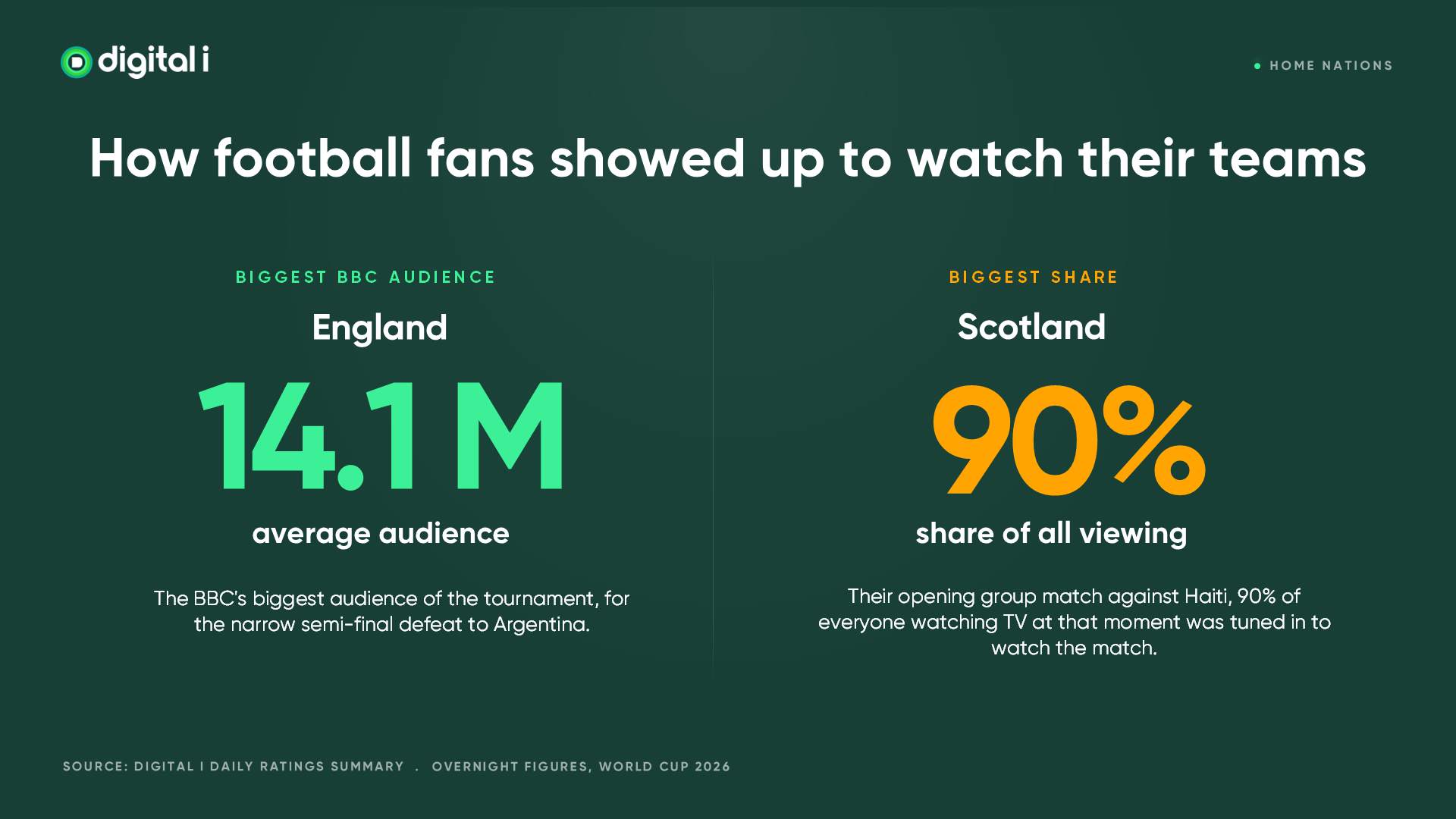
The BBC also delivered the biggest audience of the tournament, over 14 million, for England's narrow semi final defeat to Argentina. The third time England have fallen at this hurdle. The ghost of 1966 remains to be slain!
ITV however will be hugely comforted by the fact that their three exclusive England matches averaged crowds of almost 10 million, and that’s across the entirety of their coverage, not just the football action itself. Programmes delivering audiences of that size are incredibly hard to achieve in the modern TV era, particularly ones with ad breaks.
And it wasn’t just the audiences for the England matches which impressed.
Scotland's three group matches, not helped by overnight kick off times, averaged almost 3 million and would undoubtedly have risen further if they had progressed to the daylight hours. Unfortunately however they failed to take the advice of the Del Amitri song from a previous campaign and did come home too soon!
In Scotland, their opening match against Haiti was watched by an incredible 90% share of viewing.
A case of what might have been for both home nations?
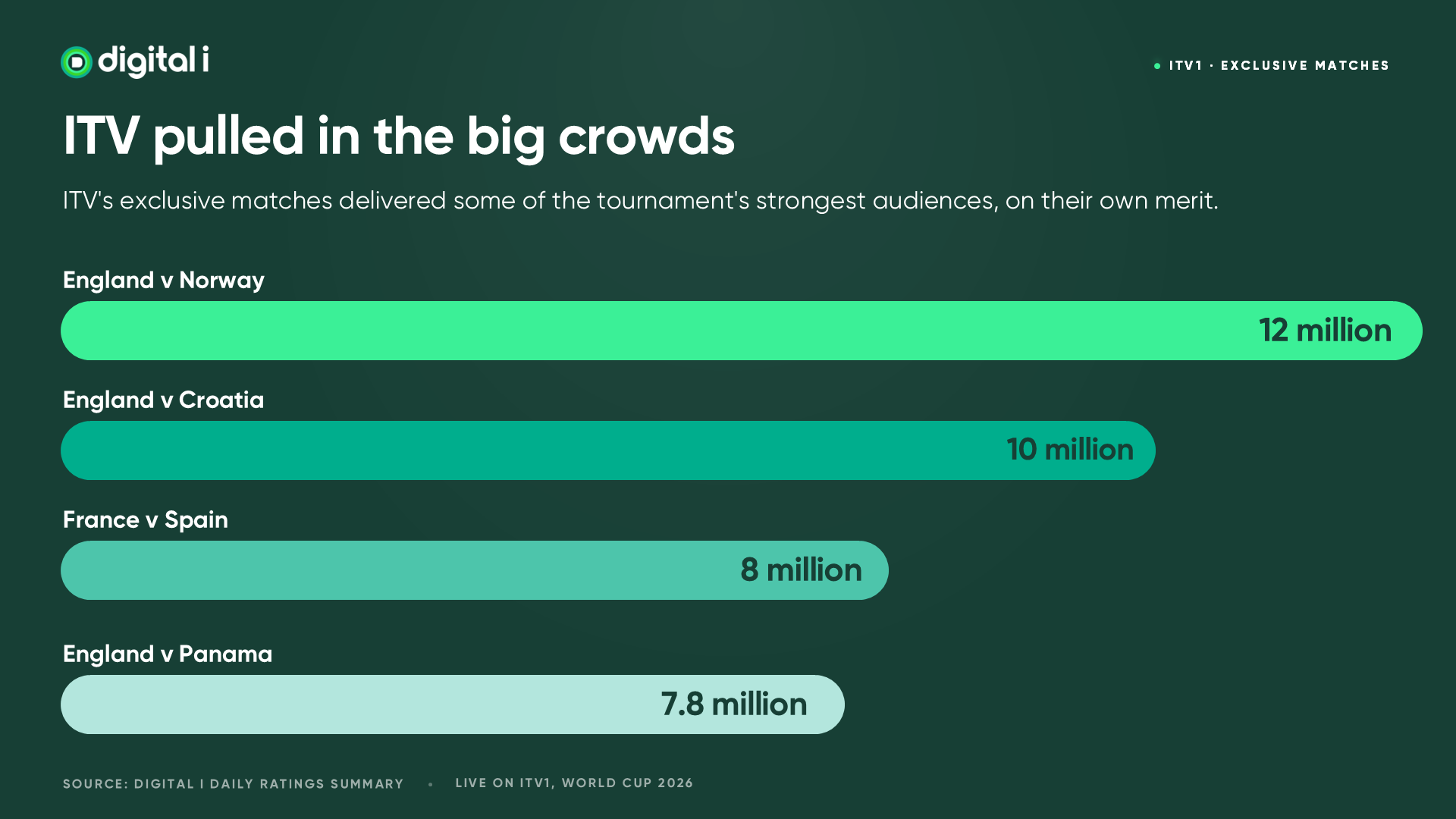
Looking elsewhere, ITV attracted audiences of 8 million for the France v Spain match, 5.4 million for Brazil v Norway and also big crowds for matches featuring less fancied teams such as South Africa v Canada, 3.8 million and Qatar v Switzerland, 3.1 million.
Overall the 104 matches in the expanded tournament delivered an average audience of over 3.3 million, and that’s including the matches which went out in the hours of the morning. With the exception of another top class sporting event, Wimbledon, which overlapped with the World Cup in early July - 4.1 million watched the men’s final - no other programmes anywhere else on the box beat that.
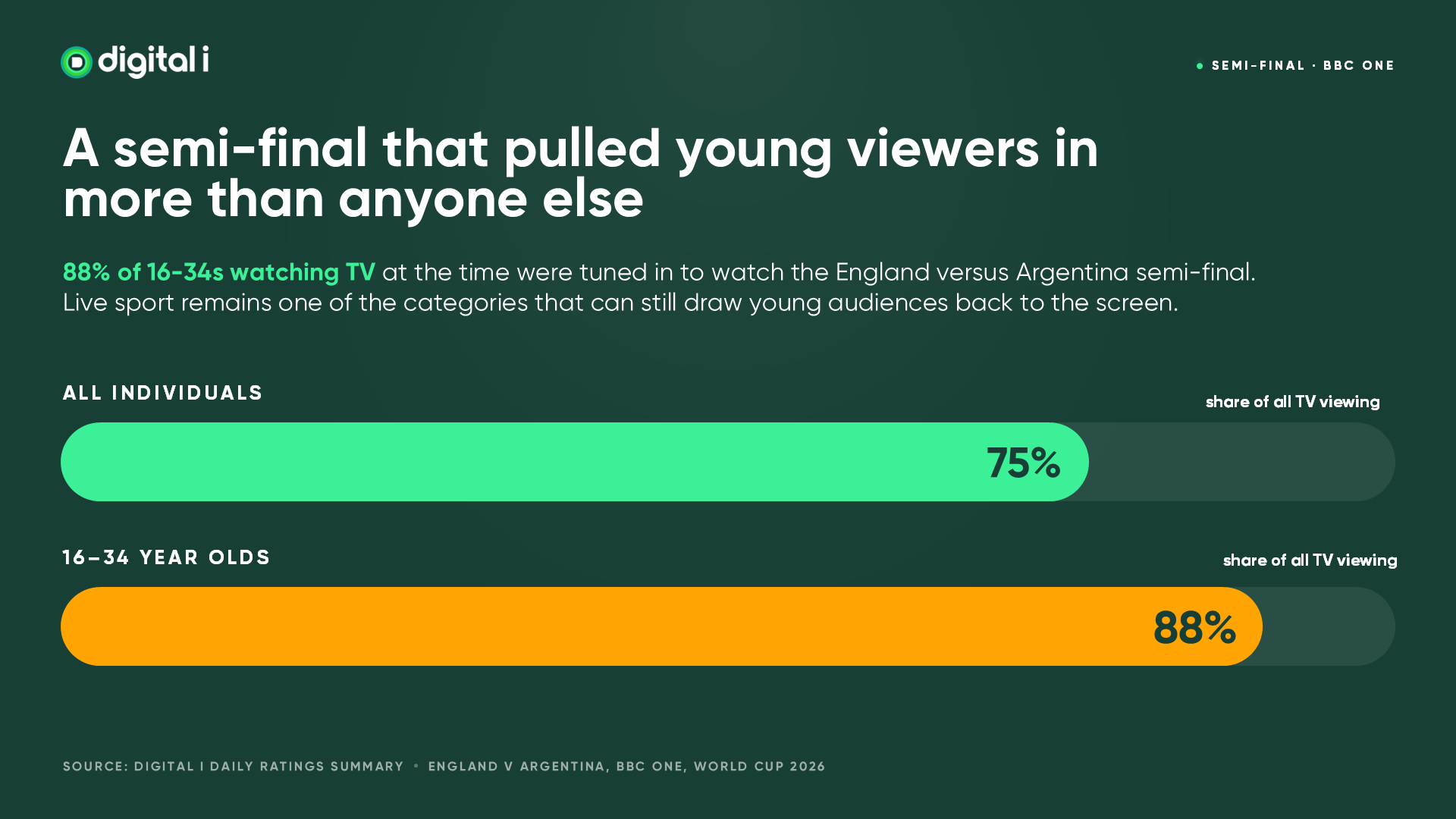
Certainly not for the increasingly hard to reach, and commercially most valuable, younger demos who flocked to the World Cup in huge numbers, viewing by 16-34 year olds averaged 65% share across the finals.
Looking forward to future tournaments, expanded finals with 48 teams, at least - FIFA is already looking at bigger again (which would raise significant logistic difficulties and potentially restrict the choice of host country) - are undoubtedly here to stay which is very good news for ITV and commercial networks in other territories.
I suspect that the new ‘hydration breaks’ in each half of games are here to stay also, even in territories where they are not strictly speaking required. The revenue potential is enormous. ITV may have been self denying with no adverts in the hydration breaks in their matches this time round but when I watched the final, on RAI1 in Italy, they were completely consumed by adverts.
In the UK, the issue with maximising the commercial value of the hydration breaks is more to do with Ofcom’s general restrictions on the amount of ad minutage allowed - and ITV were, quite rightly, already maximising that elsewhere in their coverage - than any sentiment about the sanctity of the structure of a football match.
On this, and on listed event legislation, which is what underpins the ability of BBC1 and ITV1 to host the event with no realistic competition for the rights in the UK, and on which Ofcom is consulting currently, let the lobbying begin?
Just as the tournament climaxed on the other side of the pond, coincidentally, the deal to sell ITV’s broadcast division to Comcast also closed; will ITV’s new American owners with their huge experience of subscription sport have their own views on the future of the UK’s long established free to air protection for the World Cup?
* Average audience metric is used to create the viewers number - this is calculated by averaging the audience across each minute of the broadcast, including before and after the match.
Guest blog written by Liam Hamilton for Digital i using Digital i data



.jpg)


